Active Noise Cancelling Explained Before You Fly
Active noise cancelling is genuinely transformative on an aircraft and much less impressive in a cafe, and the reason is physics rather than marketing. Understanding which sounds it removes tells you exactly when it is worth carrying.
How cancellation actually works
Microphones on the outside of the earcup sample the sound arriving at the headphone. The electronics generate an inverted copy of that waveform and play it through the driver, so the two sum to something close to silence at your eardrum.
This works well when the incoming sound is continuous and predictable, because the system has time to model it. It works poorly on sudden, irregular sound, because by the time the inverse has been generated the sound has already changed.
That single property explains almost every practical observation people make about ANC.
Why aircraft cabins are the ideal case
The dominant noise in a cabin is a broadband low-frequency roar from the engines and the airflow over the fuselage. It is continuous, it changes slowly, and it sits in exactly the frequency range where cancellation is most effective.
Removing it does not just make the flight quieter; it lowers the volume you need for music, which meaningfully reduces listening fatigue over a long flight.
The same applies to trains, buses and the constant hum of an office air handling system.
Where it disappoints
Speech is the hardest thing to cancel. It is irregular, it sits in the mid frequencies where cancellation is weakest, and human hearing is specifically tuned to pick it out. A conversation two tables away will still be audible.
Sharp transient noise — a door slam, a dropped tray, keyboard clatter — passes through largely untouched for the same reason.
If your goal is to not hear the office, passive isolation from a well-sealing closed-back design does more than the ANC circuit does.
Passive isolation matters more than the spec sheet suggests
Before any electronics are involved, a closed-back over-ear headphone with a good seal already blocks a substantial amount of sound simply by covering the ear. That passive attenuation is what handles the mid and high frequencies.
This is why earpad condition matters: a hardened, flattened pad breaks the seal and both the isolation and the cancellation degrade. Replacing pads on a three-year-old pair often restores what felt like a failing ANC circuit.
It is also why over-ear beats on-ear for isolation. An on-ear pad sits on the ear rather than around it and never seals as well.
Battery life, and what the numbers mean
Published playtime figures are usually quoted with ANC on, at a moderate volume, over a specific codec. Real-world results are close for most people and shorter if you listen loud or use a high-bitrate codec.
For a long-haul flight, anything over twenty hours removes the question entirely. The Marshall Major V we stock publishes over one hundred hours; the Sony and Sennheiser over-ear models publish figures in the thirty-hour range with ANC engaged.
Check whether the pair can be used passively on a cable when flat. That feature has saved a lot of flights.
Codecs, and whether they matter to you
SBC is the universal baseline and is perfectly listenable. AAC is used by Apple devices and sounds better on them. aptX and LDAC carry more data and matter most for high-resolution sources.
Codec support has to exist on both ends. An LDAC headphone paired with a phone that does not support it falls back to SBC, and no amount of specification reading changes that.
On a noisy aircraft, codec differences are among the least audible variables in the chain.
Wind, pressure and the odd sensations
Some people feel a pressure sensation with ANC engaged. It is not actual pressure; it is your auditory system interpreting the absence of expected low-frequency sound. Most people acclimatise within a few minutes, and most modern models offer a lower-intensity mode.
ANC performs badly in wind, because turbulence across the external microphones is itself noise. Most headphones have a wind-reduction mode that reduces cancellation to compensate.
For cycling or running outdoors, ANC is both less effective and less safe than transparency mode.
Choosing between the models on our wall
For pure cancellation and long flights, the Sony WH-1000XM5 is the reference point most people compare against. For a warmer sound signature and very long battery life, the Marshall Major V is an on-ear alternative at a different price.
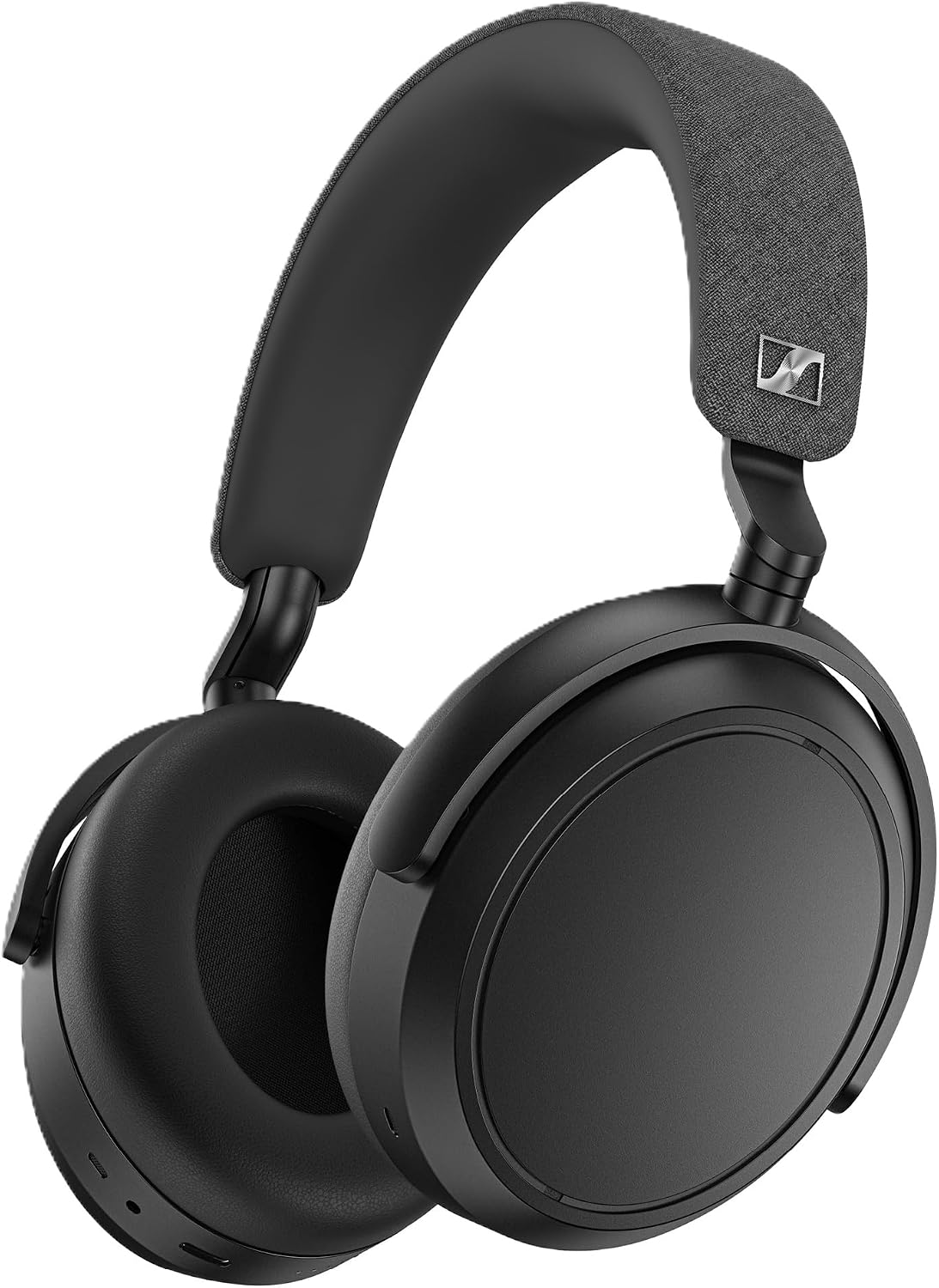
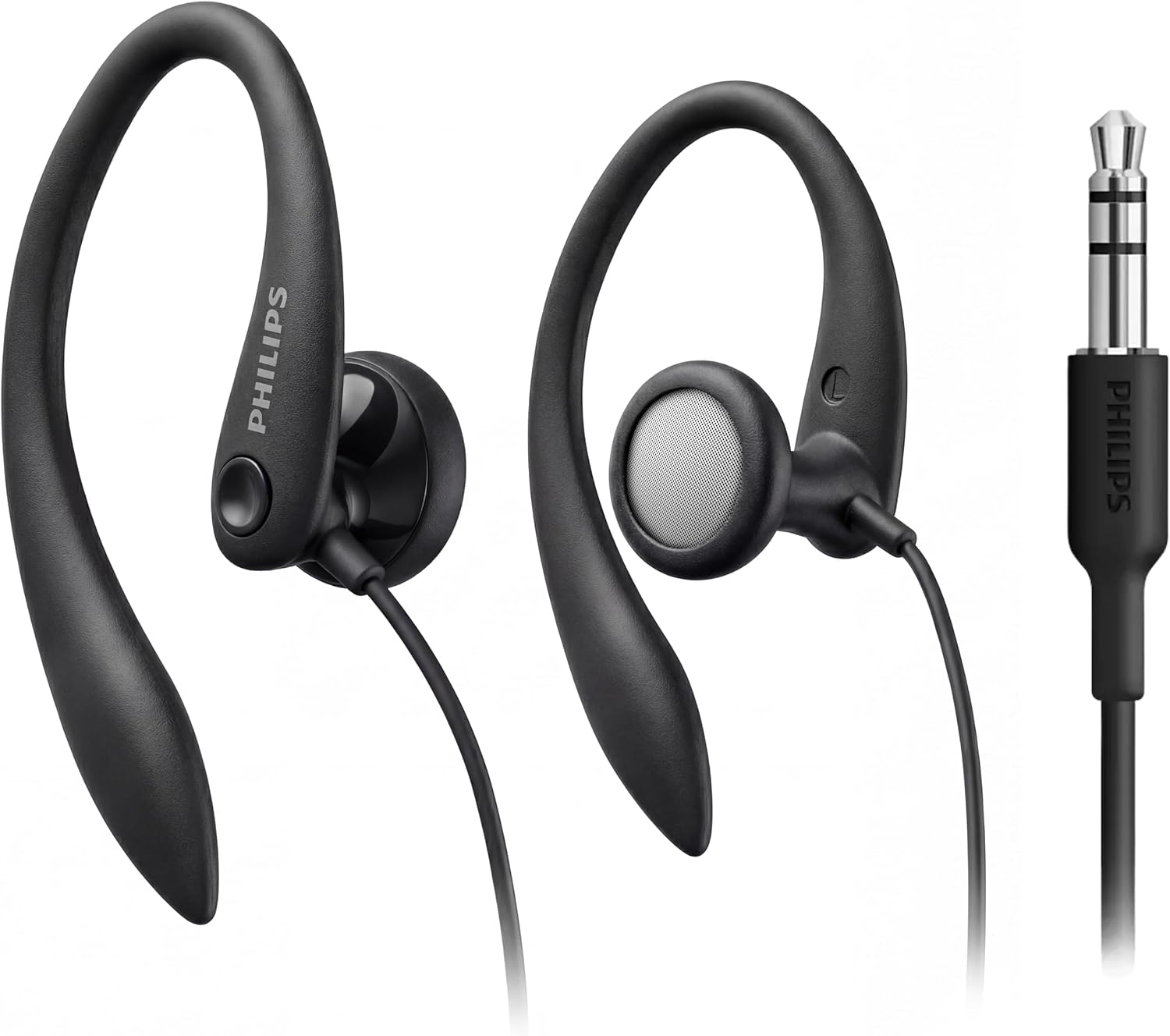
The Sennheiser Momentum 4 sits between them with a more neutral presentation and strong battery figures. For a low-profile wired option there are still flexible earhook designs that avoid batteries altogether.
All of them are on the shelf at 685 8th Avenue and all of them are listed here with the maker's own published specifications.
Where to go next
Over-ear, on-ear and wired headphones are in Headphones & Earbuds. We are open until 22:00 every day if you would rather try before you fly.
Shop Headphones & Earbuds
Related articles